Unexpected Things I’ve Learned From Building Therapist Websites
Unexpected Things I’ve Learned From Building Therapist Websites
When I first started building websites, I thought I was getting into design, branding, and marketing.
What I didn’t expect was a front-row seat to private practice. To the vulnerability of putting yourself online. To the way therapists think about visibility, ethics, boundaries, clients, money, and meaning. And to how much of all of that shows up on a website.
After working with therapists across states, specialties, and business models, I’ve realized something: therapist websites are not just about websites.
They’re about identity. Safety. Self-doubt. Growth. Burnout. Hope. And the very human challenge of trying to build something that helps people while also supporting your own life.
Here are some of the unexpected, funny, and genuinely meaningful things I’ve learned along the way.
What I’ve Learned About Therapists
One of the first things that stood out to me is that therapists are some of the most self-critical business owners I’ve ever worked with. I routinely meet therapists who are thoughtful, skilled, and deeply respected by their clients, and who are convinced their website is “bad,” “cringey,” or “embarrassing.” Often their site is actually warm, solid, and more than adequate. But because the work they do matters so much, their inner bar for “good enough” tends to be impossibly high.
I’ve learned how afraid many therapists are of “sounding salesy,” even when they’re simply explaining what they do. This makes complete sense. Therapists are trained to center clients, not themselves. They’re cautious about influence. They care about power dynamics. So when a website asks them to clearly name their services, their strengths, and their value, it can feel uncomfortable in a way that goes far beyond writing.
Therapists are incredibly skilled at describing pain. They can articulate suffering, stuckness, and emotional patterns with depth and precision. What’s often harder is naming outcomes. Relief. Change. Boundaries. Confidence. Security. Not because those things aren’t happening in the work, but because claiming them can feel vulnerable, simplistic, or like overpromising.
Therapists are master overthinkers. They worry that the smallest word choice, photo, or layout decision will make or break whether someone reaches out. That level of care comes from how seriously they take the responsibility of being someone’s therapist. The website starts to feel less like a marketing tool and more like a moral document.
Therapists apologize for having business needs. For wanting better inquiries. For raising rates. For boundaries. For wanting a practice that supports their life. Many therapists carry a belief that good clinicians shouldn’t want ease, structure, or growth. That belief almost always shows up on their websites.
Beneath all of this is something I find really moving: therapists care. About accuracy. About not harming. About not misleading. About being ethical. That depth of care is one of the reasons therapist websites can feel so tender, and sometimes so hard to build.

What I’ve Learned About Private Practice
Private practice is therapy plus small business reality. And almost no one is trained for the second half.
Most of the struggles therapists bring to me are not really website problems. They’re practice problems that are showing up on the website. Burnout. Too many wrong-fit clients. Not enough inquiries. Boundary fatigue. Financial stress. The site becomes the place where all of that collects.
I’ve learned that clients are rarely looking for “therapy” in the abstract. They are looking for very specific relief. Fewer spirals. Better sleep. Healthier relationships. Less resentment. A calmer nervous system. More trust in themselves. When a site stays too general, it often misses the very thing someone is hoping to recognize.
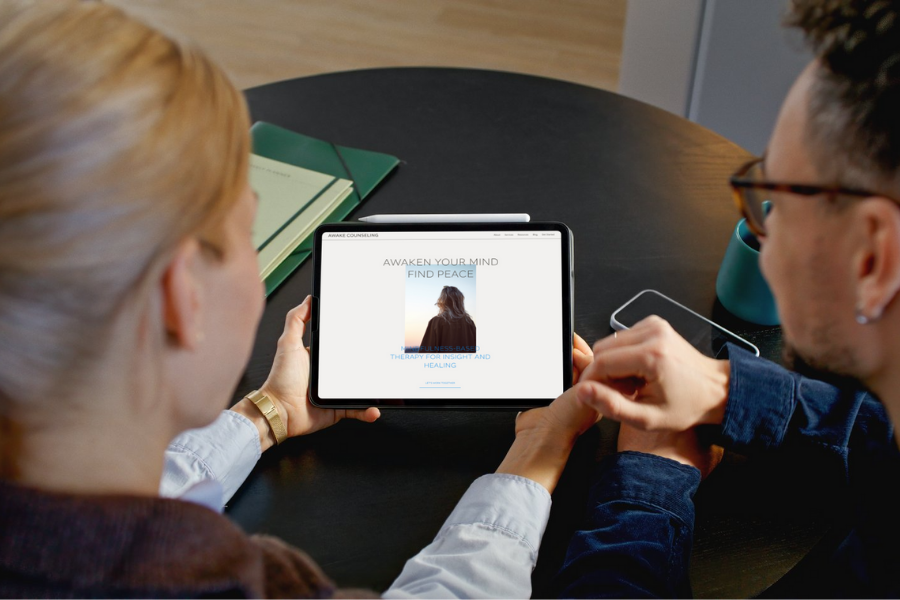
Therapist don’t realize how emotional the decision to reach out actually is. Clients are not researching therapists from a grounded, neutral place. They’re scrolling in bed. On a lunch break. After a fight. In the middle of a hard season. The website is often the only front desk, office tour, and first conversation all at once. It has to do a lot of quiet emotional work.
Therapists have become much more intentional about how they build their businesses. They’re having more nuanced conversations about private pay and insurance. They’re experimenting with policies that protect their energy. They’re letting go of the idea that they need to serve everyone. They’re building practices that work for them. That shift changes everything, including how their websites function.

What I’ve Learned About Website Design
“Simple” is emotionally hard. Almost everyone asks for a simple website, yet almost no one finds it easy to delete things, prioritize, or say one clear thing instead of six almost-clear things. Simplicity requires decisions, and decisions require letting go.
A beautiful website can fail completely. Aesthetics don’t fix confusion. People don’t experience websites as designs. They experience them as movement. Can I find myself here? Do I understand what this person does? Do I know what to do next?
One of the biggest surprises for therapists is how much consistency does. Spacing, hierarchy, repeated layouts, and predictable structure build more trust than clever design ever could. A site starts to feel professional and calming when nothing is fighting for attention.
I also see how often therapists blame stock images, colors, and fonts for problems that are really about structure. The site doesn’t feel right, so the palette gets changed. But what usually brings relief is reorganizing information, clarifying messaging, and giving the reader fewer things to hold at once.
The best therapist websites I’ve seen are rarely the most creative. They are the most clear. They feel calm not because they are minimal, but because nothing is competing.
What I’ve Learned About SEO and Google
Google does not care how meaningful your work is. It cares how clear your pages are. This is often frustrating for therapists, especially those doing very deep, nuanced work. You can write the most beautiful, thoughtful copy of your life and still not get traffic. And you can write one very practical, specific article and get inquiries for years.
What I’ve come to love about SEO is that, at its best, it’s not about gaming anything. It’s about organizing your thoughts, turning what you know into clear pages, and naming things the way people search for them. It’s all about making it easier for the right people to find you.
One thing that genuinely excites me is how many therapists are now engaging with SEO. They’re learning it themselves. They’re hiring support. They’re recognizing that visibility matters. Gone are the days when you could put up a site with no structure and hope it would work. Therapists are meeting that reality with curiosity and effort, and it shows.
Blogs don’t usually fail because they aren’t long enough or smart enough. They fail because they don’t match what anyone is actually typing into a search bar. When that alignment happens, the site starts working very differently.
What I’ve Learned About Getting Clients
People rarely click “Contact” because they feel inspired. They click because they feel understood. They recognize themselves. They see their problem named. They understand how this person works. They know what happens next.
Clients are not comparing therapists the way therapists imagine. Most people are not reading ten sites and analyzing credentials. They’re asking simpler questions. Do I feel safe here? Do they work with my issue? Is it easy to get started?
Your ideal client is not looking for “the best therapist.” They are looking for someone who feels like a fit. That sense of fit is emotional first and logical second.
Most inquiries are not confident. They’re tentative. They’re often short. Sometimes messy. Sometimes overly long. Your website either makes space for that, or unintentionally filters out the very people you want to support.
What I’ve Learned About Marketing
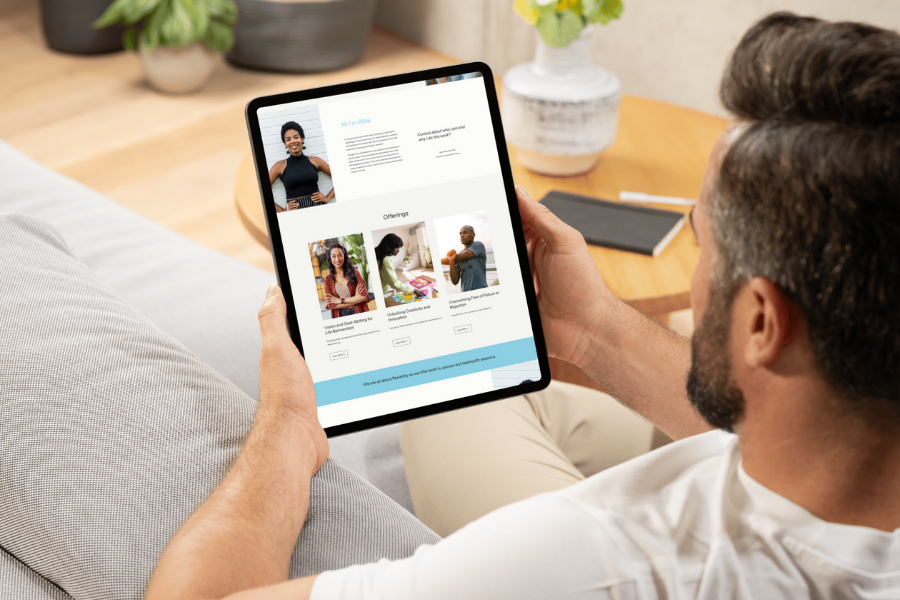
The biggest shift for many therapists is realizing that marketing is not convincing. It’s translating. It’s taking what you already know how to do in a room and expressing it in a way someone can recognize on a screen.
The best marketing rarely feels like marketing to the right person. It feels like relief. Like being seen. Like, “Oh. This might be what I’m looking for.”

Some Things That Still Make Me Smile
After all this time, there are a few patterns that come up so often they’ve become oddly comforting.
You can usually spot a therapist-written website within a few sentences. There’s a particular mix of care, depth, and gentleness that’s hard to fake.
“Warm and compassionate” appears on more pages than almost any other phrase, which makes sense. Most therapists are.
The About page is almost always longer than the Services page. Therapists often find it easier to explain who they are than to clearly structure how they help.
Therapists often tell me it’s hard to talk about themselves, and then show me a website that mostly talks about themselves instead of their clients. That usually comes from not wanting to assume too much about what someone else needs. It’s a values-based hesitation, even if it ends up missing the reader a little.
Almost everyone thinks their niche is “too something.” Too narrow. Too broad. Too disjointed. Not a niche at all. (It almost always is.)

The Big Thing This Work Has Taught Me
Designing websites for therapists has taught me that this work is not really about websites.
It’s about helping people translate what they do into something others can feel.
It’s about building structures that hold both the therapist and the client.
It’s about taking the invisible and making it a little more visible.
Every site reflects a person in the middle of building something meaningful. With doubts. With hopes. With constraints. With growth edges.
Being invited into that process has made me deeply respectful of how much courage it takes to put yourself and your work into the world.
And it’s why I care so much less about “perfect websites” and so much more about websites that are honest, clear, and supportive of the real humans on both sides of the screen.

Pin it!



















Some of My Favorite Private Practice Tools
Resources and Referral Links